
Independent Review

Pixel Flow Burst — Independent Review & Guide

Pixel Flow Burst is an independent informational website offering a detailed review, gameplay guide, and editorial tips for the mobile colour-and-pixel puzzle game Pixel Flow Burst. We are not the official developer website, and we have no partnership with Google or the developer.

Play on Google Play

What Is the Game?

Pixel Flow Burst is a mobile colour-and-pixel puzzle game available on Google Play. The core gameplay involves solving puzzles by manipulating coloured pixels or blocks to create flows or bursts. The game is listed under the package ID com.gss.color.blast.pixel.flow.game, and it is a puzzle game with a focus on colour and pixel mechanics. The official listing provides the primary source of verified information.

Our site provides an independent review and guide. We are not affiliated with the developer or Google, and our assessments are editorial opinions based on the official listing and general puzzle game conventions. We do not copy the Google Play description verbatim, and we avoid inventing unverified mechanics, characters, or statistics.

Verified
  • Game name: Pixel Flow Burst
  • Google Play package ID: com.gss.color.blast.pixel.flow.game
  • Genre: puzzle
  • Platform: Android via Google Play
Lab Notes

This site provides an independent review and guide. We are not affiliated with the developer or Google, and our assessments are editorial opinions based on the official listing and general puzzle game conventions.

Gameplay at a Glance

Core Mechanics

Colour and pixel interaction

Players interact with coloured pixels or blocks, likely by tapping, swiping, or connecting them to create flows or clear patterns. The exact mechanics are based on the official listing and general puzzle conventions. The game is described as a colour-and-pixel puzzle game, and gameplay likely involves matching colours or creating pixel bursts. We avoid claiming specific unverified mechanics.
Visual & Audio

Vibrant pixel presentation

The game features a colourful pixel art style with vibrant colours and likely simple, satisfying sound effects. The visual presentation is a key part of its appeal. Pixel art is implied by the game name and listing, and the colourful palette is a core element.

Lab Notes

Progression & difficulty

The game likely offers a series of puzzles with increasing difficulty, but specific level counts or progression systems are not confirmed from the listing. We do not invent level counts or reward systems. General puzzle games often have progressive difficulty, but this is not verified.

How to Play

1

Observe

Look at the puzzle board and identify the coloured pixels or blocks. Understand the goal, which is likely to create flows or clear groups of matching colours. Take time to scan the board before making moves. The exact goal may vary; we base this on general colour-puzzle conventions.

2

Decide

Plan your move. Consider which pixels to connect or move to create the desired effect. Think about the consequences of each action. Strategic planning is key to success, and avoiding random taps will help you look for patterns.

3

Move

Execute your move by tapping, swiping, or dragging as appropriate. The game likely provides immediate feedback. Controls are simple and intuitive, and feedback helps you learn the mechanics.

4

Clear

Successfully clearing pixels or creating flows will likely remove them from the board and award points or progress. Watch for chain reactions. Clearing is the core objective, and chain reactions may occur but are not confirmed.

5

Continue

Proceed to the next puzzle or level. Difficulty may increase, requiring more advanced strategies. Progression is likely but not verified. Apply what you learned to new challenges.

Understanding the Puzzle

The game likely revolves around matching colours or creating continuous flows of pixels. Understanding how colours interact is essential for solving puzzles efficiently. Colour is a central mechanic, and flows may involve connecting same-coloured pixels. Exact rules are not fully confirmed, so we focus on general principles.

Creating a “burst” likely involves clearing a group of pixels, possibly by completing a flow or matching a pattern. The burst mechanic adds a satisfying visual and strategic element. Bursts may clear larger areas, and planning for bursts can maximize efficiency.

Strategy

Treat every move as a setup for the next one. Before you tap, ask what the board will look like afterwards and whether that position opens a better clearing opportunity. A short pause at the start of each puzzle often saves several wasted moves later.

Colours & Pixel Flow

Colour Significance

Each colour likely has a specific role, such as being part of a flow or a target for clearing. Recognizing colour patterns can speed up puzzle solving. Colours are visually distinct, and patterns may emerge from colour arrangements.

Strategy

Flow Mechanics

Pixel flow may involve moving pixels along paths or connecting them in sequences. Understanding flow direction and constraints is key to advanced play. Flow may be directional or free-form, and planning flow paths can prevent dead ends.

Visual Feedback

The game likely provides visual feedback when colours match or flows complete, helping players learn mechanics quickly. Feedback reinforces correct actions, so pay attention to animations and highlights.

Planning Your Moves

Strategy
  • Think ahead. Before making a move, consider the immediate result and potential chain reactions. Look for moves that set up future clears. Anticipate how the board will change, and prioritize moves that create multiple clears.
  • Avoid random taps. Random tapping often leads to dead ends. Instead, scan the board for patterns and plan a sequence of moves. Pattern recognition improves efficiency, and taking your time is likely fine since there is no time pressure.
  • Use the whole board. Don’t focus on one area. Consider how moves in one part affect the entire board, especially if flows can cross or interact. Global awareness prevents missed opportunities, and looking for moves that open up new areas helps.

Beginner’s Guide

1

Start with the Basics

Familiarize yourself with the board and controls. Play the first few puzzles slowly to understand how colours and flows work. Don’t rush; learn the mechanics and use the visual feedback to guide you.

2

Focus on Simple Goals

Initially, aim to clear any group of pixels rather than optimizing. This builds confidence and understanding. Simple clears are still progress, and you can gradually increase complexity.

3

Learn from Mistakes

If a move doesn’t work, analyze why. Adjust your strategy for the next attempt. Mistakes are learning opportunities, and keeping a mental note of effective patterns helps.

Puzzle-Solving Techniques

Technique

Pattern Recognition

Learn to spot recurring colour patterns and flow shapes. Recognizing these can help you solve puzzles faster. Patterns often repeat across puzzles, so develop a mental library of common configurations.

Strategy

Chain Clearing

Look for moves that trigger multiple clears in sequence. Chain reactions can clear large portions of the board. Chain clears are efficient, so set up moves that cascade.

Technique

Edge Management

Pay attention to the board edges. Pixels near edges may have limited movement options, so plan accordingly. Edges can be bottlenecks, so clear edge pixels early if possible.

Common Beginner Mistakes

Lab Notes
  • Rushing moves. Many beginners tap quickly without planning. Take a moment to assess the board before each move. Rushing leads to suboptimal clears, so slow down to improve accuracy.
  • Ignoring colour patterns. Overlooking colour relationships can result in missed opportunities. Train your eye to spot matching colours quickly. Colour awareness is crucial, so practice scanning for patterns.
  • Focusing on one area. Tunnel vision on a single part of the board can blind you to better moves elsewhere. Keep a global view. Balance local and global strategy, and regularly scan the entire board.

Improving Your Approach

Verified
  • Practice regularly. Consistent practice helps internalize patterns and mechanics. Even short sessions can improve your skills. Regular play builds muscle memory, so set small goals for each session.
  • Analyze your games. After each puzzle, reflect on what worked and what didn’t. Adjust your strategy accordingly. Self-analysis accelerates learning, so keep a mental log of effective moves.
  • Experiment with strategies. Don’t be afraid to try new approaches. Experimentation can reveal more efficient techniques. Variety prevents stagnation, so test different move orders.

Difficulty & Progression

Lab Notes

Like many puzzle games, Pixel Flow Burst likely introduces more complex puzzles as you progress. However, specific level counts or difficulty tiers are not confirmed from the official listing. We avoid inventing level numbers or progression systems. The difficulty curve is inferred from general puzzle game design.

Visual Style & Presentation

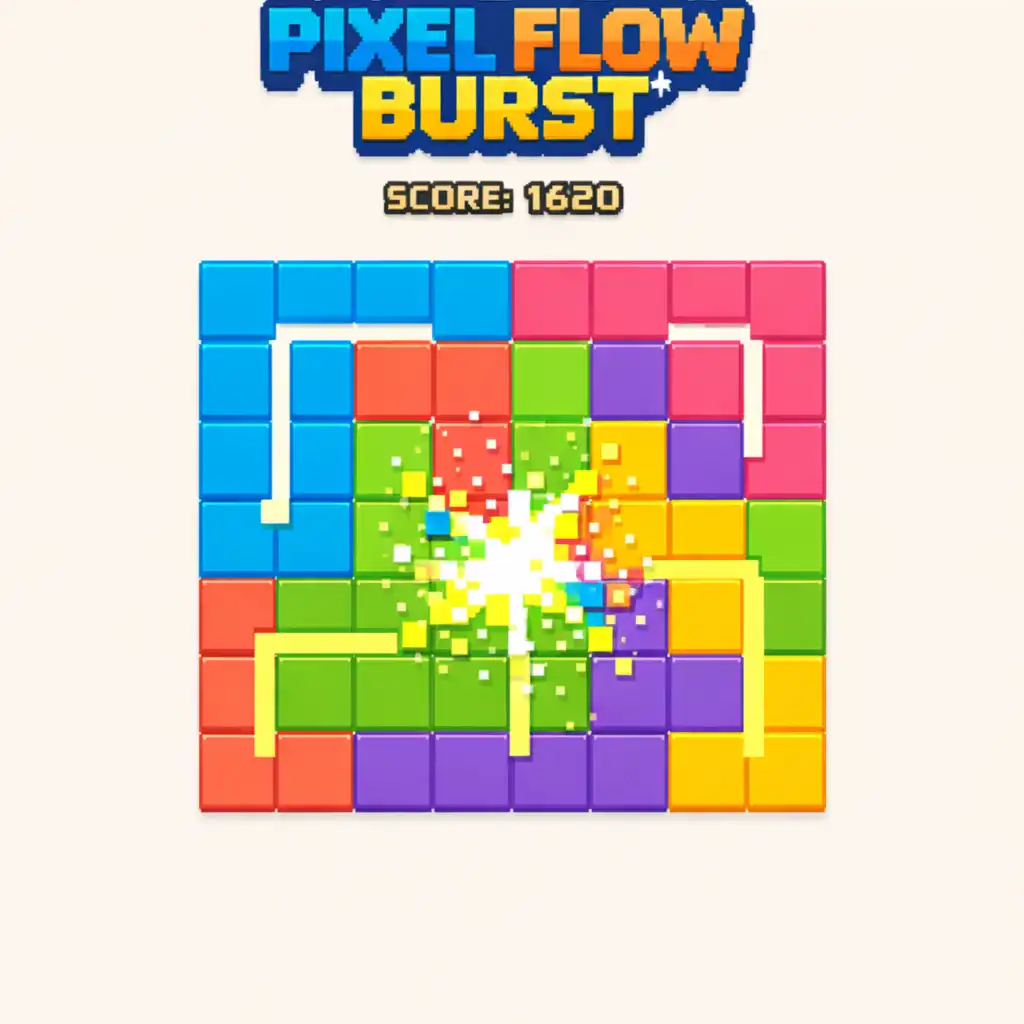
Pixel Flow Burst features a vibrant pixel art style with a bright colour palette. The visuals are likely clean and appealing, with smooth animations for puzzle interactions. Pixel art is a core aesthetic, and colours are used to distinguish game elements. Animations likely provide satisfying feedback.

The game’s presentation appears polished, with a focus on clarity and visual feedback. This enhances the puzzle-solving experience. Clear visuals help players understand mechanics, and polished presentation adds to enjoyment.

Pixel Flow Burst gameplay showing a player interacting with coloured pixels on a puzzle board
A gameplay screenshot showing the colourful pixel puzzle in action.

Our Detailed Review

Lab Notes

Pixel Flow Burst offers a colourful and engaging puzzle experience that is easy to pick up but offers depth for those who seek it. The core mechanic of colour and pixel flow is satisfying, though the game may not reinvent the genre. The visual style is appealing, the controls are simple to learn, and the game is potentially challenging to master. However, it may feel familiar to puzzle game veterans.

Strengths

  • Vibrant pixel art and appealing visuals
  • Intuitive colour-based mechanics
  • Simple controls
  • Potential for strategic depth

Limitations

  • May not offer enough novelty for some players
  • Possible repetition over long play sessions
  • Long-term engagement uncertain without more information

Strengths & Limitations

Strengths
  • Visually engaging
  • Easy to learn
  • Satisfying feedback
  • Polished presentation
Limitations
  • May feel familiar
  • Long-term appeal unclear
  • Limited verified information on progression

Who Might Enjoy It?

Pixel Flow Burst is likely to appeal to fans of casual puzzle games, colour-matching mechanics, and vibrant pixel art. Players who enjoy strategic planning and pattern recognition will find it engaging. If you like games that are easy to learn but offer room to improve, this one is worth a try.

  • Casual and strategic players
  • Fans of colour puzzles
  • Those who appreciate pixel art

FAQ

Ready to Play?

Experience the colourful pixel puzzles of Pixel Flow Burst. Download it now from the official Google Play listing.

Play on Google Play